

Do your best ideas always hit you when you’re on a walk, in the car, or in the shower?
I know mine do. This is called the “Incubation Effect” or the “Shower Effect”. I’ve often said I should have a “wetboard” to capture all those great ideas. Like a whiteboard for the shower.
Fortunately, I’ve been turning to on-the-fly dictation with Voicenotes which helps me capture my ideas for, among other things, articles, books, and short stories.
And I’m not the only one who gets “aha” moments when my mind wanders; 72% of people surveyed say they get new ideas in the shower.
More interestingly, here’s what I’m obsessed with lately:
Is it better to develop compelling ideas or grind out a lackluster draft and fix it later? There are arguments for both.
That leads me to this question:
Can we harness mind wandering and improve our creative process by taking better advantage of the Shower Effect?
I’m betting yes, and the secret is contained in a 100 year old concept detailed by Graham Wallas. The magic happens during what Wallas called the incubation stage, where you’ve stopped trying to solve the problem at hand and let things percolate in the background.
The reason you get your best ideas when you stop trying is that active thinking often creates a traffic jam in your brain.
The end result? Your creative muse is all jammed up. Getting in the shower sets it free because, well, that’s just how the brain works.
Incubation Shall Set Your Muse Free
Let’s say you have a problem. Maybe it’s what the topic of your next newsletter issue or blog post should be. Maybe your problem is the best way to market your book, or how to create a new income stream. Maybe you’re stuck on developing a fictional character or juicy plot twist. Whatever.
The tendency is to try harder to force the solution, but the answer may be the opposite: let go.
Your mission, should you choose to accept it, is to allow your muse to be free to create. This makes sense once you understand the Incubation Effect and why the traffic jam happens in the first place.
The original idea for the concept of incubation was published in 1926 in The Art of Thought by Graham Wallas, a political psychologist and a founder of the London School of Economics. He split the creative process into 4 stages:
Preparation: The conscious, focused work of gathering information and investigating the problem.
Incubation: A period of stepping away from the problem, allowing the unconscious mind to work on it without conscious effort.
Illumination: The “aha!” moment when the solution or idea suddenly appears.
Verification: The stage of consciously testing, developing, and implementing the idea to see if it works in reality.
What’s happening under the hood?
How Incubation Works
1 - The Spotlight vs. The Floodlight
Your brain has two primary modes of operating that rarely work at the same time.
The Executive Control Network (ECN) - The Spotlight: The ECN kicks in when you focus hard. It’s perfect for executing tasks, doing math, or following a linear path, but it’s restrictive.
To focus, it has to block out any “distractions.” Unfortunately, the solution to a problem often looks like a distraction, and those get filtered out.The Default Mode Network (DMN) - The Floodlight: This network activates when you zone out, fold laundry, or go for a walk.
You could say it’s your brain’s “idle” state, but it’s more like active rest than idle. Unlike the focused mode, this network is associative. It connects memories, ideas, and facts that don’t always logically belong together. While your mind is wandering, it’s solving problems. Daydreaming your way to solutions is a thing.
When you stare at a problem, you’re trapped in the Spotlight. You keep walking the same well-worn neural pathways. When you quit trying so hard and go for a walk, the Spotlight turns off, and the Floodlight turns on. Your brain starts to play a little and search the entire library of your knowledge and experiences to make connections.
2 - Quieting the Prefrontal Cortex
The front part of your brain, just behind your forehead, is the prefrontal cortex. Humans have the most highly developed prefrontal cortex of any animal. It is sometimes referred to as the CEO or the “boss” of your brain, making decisions and enforcing rules.
When you have a puzzle in front of you, the boss is orchestrating, shouting orders: “Does this work? No? Focus!” This creates neural noise and “cognitive inhibition” which blocks weird or weak ideas because they seem irrelevant.
Creative insights don’t always make sense. Often, they can be “quiet” signals; weak or unusual associations between distant concepts. But this is often where the magic lives. When you’re focused, you can’t hear the magic over the shouting of the prefrontal cortex.
When you relax, however, the boss leaves the room for a minute. When the cat’s away, the inhibition goes along with it, and those quieter, weirder, seemingly disconnected ideas can finally bubble up to the surface.
This allows you to see new perspectives and get your weird on, judgement free. And great things come from the weird.
3 - Background Processing
When you stop consciously working on a problem, your brain holds the “unresolved loop” of the problem in the background. While you wash dishes, your mind is wandering, and your subconscious continues to toss the problem around, testing it against random things you see or remember.
Since you aren’t forcing a specific result, your brain is free to try “illegal” moves and daring feats of creativity. It combines ideas that your logical brain would have immediately rejected as “wrong.”
This leads to the “aha” moment, which may or may not be obvious at the time. This isn’t woo-woo “put books under your pillow and know the contents when you wake up” stuff. This is something all of us experience. It’s the creative process, and it’s been studied.
What This Means for Creatives
Creativity requires balance between the ECN and the DMN.
…creativity is tied to the capacity to dynamically switch between brain networks supporting spontaneous and controlled cognition.
Creativity is a sort of “guided chaos” and that means using both brain networks. Good news…
Creative people are better at switching between the ECN and the DMN, so you already have an advantage. But… we still get stuck, or worse, stuck in the trance of “Mediocrityland.”
Mediocrityland is where most people live and operate daily, but it’s kryptonite to creatives. It’s insidious because you think you’re doing good work, but no, you’re just generating slop. Human slop.
When that happens, what we want need is a reliable process to unleash the muse so the muse can reveal the insights, the connections, and the meaning in the space between.
The key thing to remember?
You can’t demand insights or force creativity because the part of your brain in charge of “forcing” things is the very part that blocks creativity. Like a chaperon on prom night, the gatekeeper is blocking the muse.
This applies to creative problem solving in writing, art, business, you name it.
How This Applies to Writing
When it comes to writing habits, routines, and processes, I often hear about 2 camps:
1 - Write or do nothing. If you’re not inspired, don’t write, but during this time, do nothing else. In other words, writing time is for writing, but if you’re not inspired, don’t write. These people rely on inspiration.
2 - Write at the same time each day, in the same place. No inspiration required. Raymond Chandler said he would avoid reading books by people who don’t write from inspiration, assuming they were dull or their minds were blank.
There are variations on these strategies, and maybe there is room for more ways to approach this.
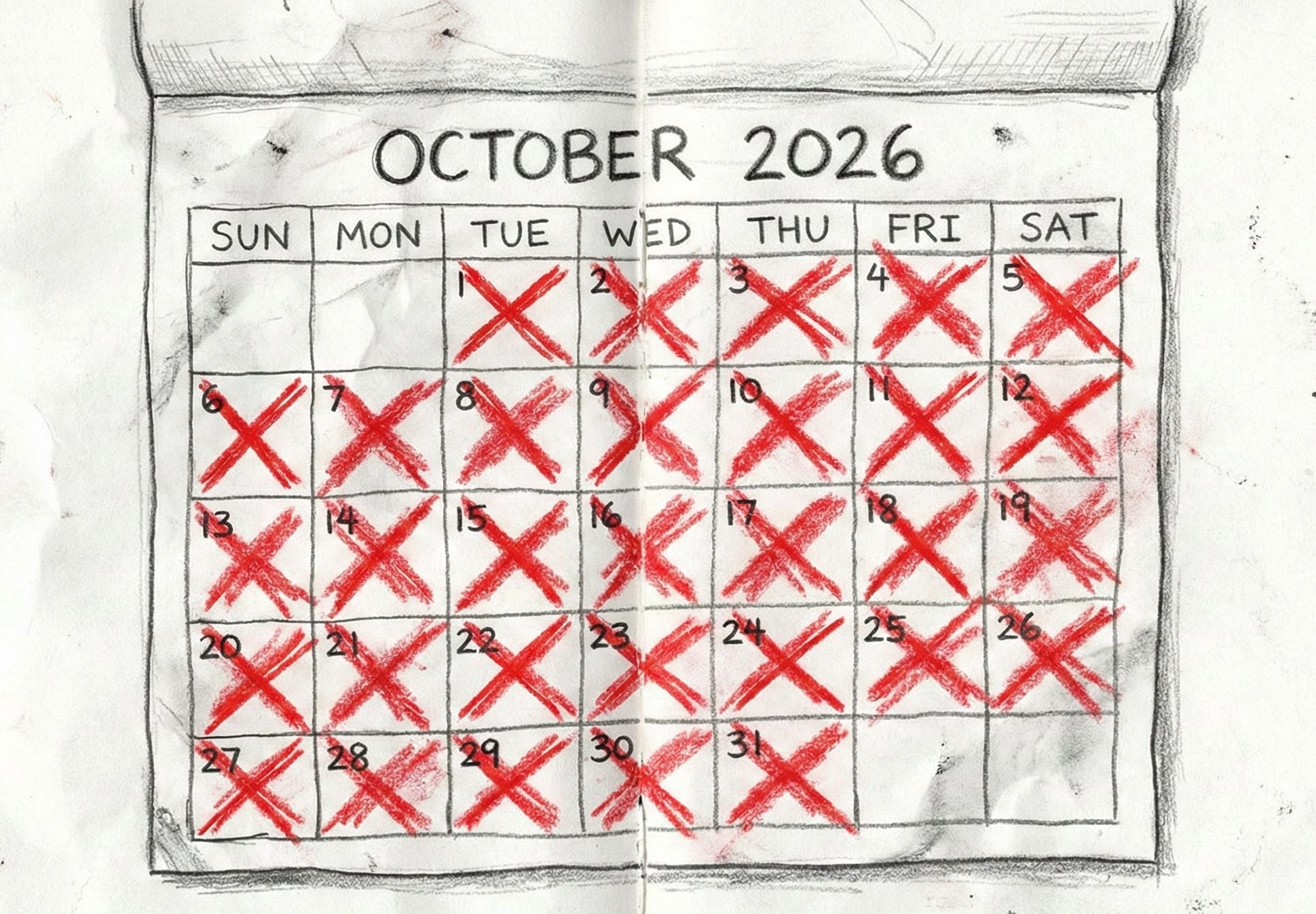
The “Seinfeld Strategy” of writing every day and placing a big red X on a calendar sounds great. I’m sure it works to overcome procrastination. It also creates quantity, and quantity, as we’ve discovered, leads to quality.
But… what if you could crank out higher quality writing in the first place?
There are 3 things that can happen during a writing session. Think of them as zones.
Zone 1: Greatness (or at least, goodness).
Zone 2: Crap.
Zone 3: Nothing.
I have a specific process for summoning my muse which makes it more likely I’ll stay in Zone 1. At least, that’s the delusion I maintain for myself.
When in doubt, choose the muse…
Let me borrow from Johnny Carson and say my muse comes up with some weird wild and wacky stuff (no punctuation intended). My muse and my logical side sometimes fight like siblings forced to share the same room.
I often choose my muse’s ideas over my analytical side’s objections (good bet), but what if the muse is a no-show? What if you have a creative block?
You can’t edit what doesn’t exist…
Standard advice says Butt-in-Chair (BIC). Just write. Why? Because you can’t edit what doesn’t exist. Write the first draft and fast, even if it’s crap.
Fair. Valid. True. You could even argue that all first drafts are crap. That’s a good psychological tool that we writers use to take the pressure off ourselves and get something on the virtual page.
But what if looking at things in a different way meant you could write a next-level first draft that didn’t suck? What if that was also true?
Maybe habits are over rated…
Every where I turn, people talk about writing routines: showing up, writing every day, and building habits and James Clear and Jerry Seinfeld. Okay, so habits are great. I agree.
BIC every day builds a writing habit and I’m sure the red X’s on the calendar feel good. I like the idea. I may even try it. I’ve even thought about buying a domain name and building a website or a tool around daily or weekly writing progress.
But just having your butt in the chair doesn’t unlock your creativity and unleash your greatness (or even guarantee good or acceptable output, or any output at all).
It doesn’t guarantee you’re even writing during that time. Sitting in a chair and not writing during your writing time is, by definition, not writing.
Jerry Seinfeld agreed with Raymond Chandler: during writing time, you can write or do nothing (stare at the window or stand on your head as Chandler said). You’re in a writing cave, a virtual prison of your own making that becomes a crucible powered by boredom.
Raymond Chandler’s rules were clear (you don’t have to write, but you can’t do anything else). Other writers have said it, too. Clearly, this idea resonates with many.
Does boredom lead to inspiration? Maybe. Maybe not.
That brings us back to “you can’t edit what doesn’t exist.” If you don’t write during your writing time, when you emerge from your cave, you have nothing to show for it. There’s nothing to improve.
What if instead of writing blindly at 6 am and cranking out mediocre work (or nothing at all), you could use that time to write a better first draft?
For that you need your muse.
If you’re grinding out words without inspiration or you’re staring at the wall, you’re stuck in Mediocrityland. Seinfeld said to just accept your mediocrity and the hard work it would take to overcome it, but wait…
To do your best work, you have to disengage the “gatekeeper” to get its knee off your muse’s neck.
Let’s pretend for a minute the best solution isn’t to force it, and it isn’t to remain trapped in a room until boredom forces inspiration upon you. Instead, the solution is an intentional, orchestrated break, taken at the right time and in the right way.
Back to the key question:
Is it better to develop compelling ideas, or grind out a lackluster draft just to say you did? There are arguments for both, but today, I’m going with the compelling ideas.
What’s Next?
Next time, I’ll dive into details of the orchestrated break with “The Guided Break” method to awaken your muse and get you out of Mediocrityland, should you find yourself there. No boredom, calendar, or crucible required. Subscribe to be notified when I publish.